
With coding agents, building new features has become easier, but knowing what to build hasn't. Here's why feedback tools are more important than ever.
With coding agents, building new features has become easier, but knowing what to build hasn't. Here's why feedback tools are more important than ever.
Building features is faster than ever, but deciding what to build is the real challenge. AI coding tools like Spotify's "Honk" have made development nearly effortless, but over 50% of product teams still create features users don’t use. Why? They misinterpret scattered feedback, prioritize the wrong requests, or rely too much on flawed scoring systems.
Here’s the problem:
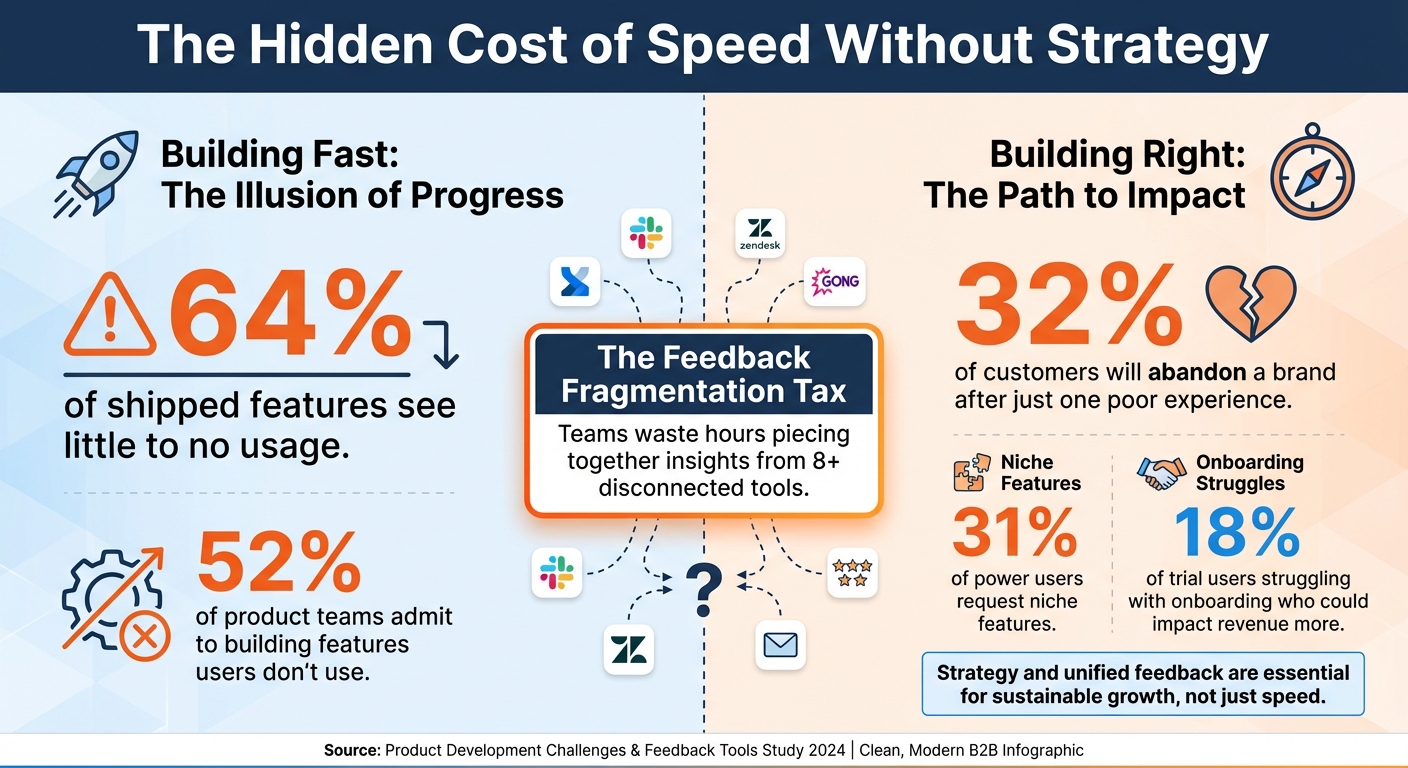
- 64% of shipped features see little to no usage.
- Teams waste time piecing together feedback from 8+ tools like Slack and Zendesk.
- Decisions often favor loud voices over silent but critical user needs.
Feedback tools solve this by centralizing insights, analyzing patterns with AI, and linking feedback to real user behavior. Tools like Modu go further by ranking requests by business impact and integrating directly with platforms like Jira or Slack.
Key takeaway: Coding agents make building fast, but feedback tools ensure you're building the right things. Without them, speed becomes wasted effort.
The Problem: Building Fast Without Direction
Why Speed Without Strategy Fails
Coding agents have made feature development faster than ever, turning it into a sprint. But here's the catch: speed without a clear strategy can waste precious engineering resources. Imagine shipping features at breakneck speed, only to find out they’re barely used. That’s not hypothetical - 64% of features shipped by product teams see little to no usage [5]. This isn’t just a waste of time; it’s a missed opportunity to focus on what truly matters.
The core issue isn’t technical - it’s strategic. Teams often fall victim to what’s called the "Feedback Fragmentation Tax." Customer insights are scattered across an average of eight tools, including Slack, Zendesk, and Gong [4]. This fragmentation forces teams to spend countless hours piecing together feedback. By the time it travels from Support to Research to Product Management to Engineering, the original customer voice is so watered down that it loses its meaning [4]. The result? Misaligned priorities and wasted effort.
Common Mistakes in Choosing What to Build
Even beyond the challenges of rapid development, deciding what to build can be a minefield. One of the biggest mistakes teams make is prioritizing features based solely on the volume of feedback. For instance, 31% of power users might request a niche feature, but addressing the 18% of trial users struggling with onboarding could have a far greater impact on revenue [2]. If you’re only listening to the loudest voices, you might miss the silent but critical needs of other user segments.
Another common misstep is putting too much faith in structured frameworks like RICE scoring. While these tools can provide a sense of objectivity, they often lack the depth needed to make informed decisions. Without understanding how frequently a problem occurs or which user groups are affected, teams risk building solutions that don’t solve real issues [5]. It’s not just about scoring - it’s about uncovering what truly matters.
The Solution: Using Feedback Tools to Guide Development
How Feedback Tools Connect Teams to Users
When coding teams speed up feature development, feedback tools help ensure they focus on what users actually need.
These tools gather input from various sources - support tickets, Slack conversations, app store reviews, and sales call transcripts - into one place. This eliminates the "Feedback Fragmentation Tax" and saves valuable time [4].
With AI-powered feedback tools, teams can sift through thousands of comments to uncover recurring themes and previously overlooked feature requests. This approach moves teams away from relying on gut feelings and toward making decisions based on solid data [1]. By linking user feedback to behavioral analytics, teams can confirm whether reported problems - like a "broken checkout" - align with measurable drops in metrics like conversion rates [1]. This kind of streamlined analysis delivers actionable insights that product teams can use to make informed choices.
Main Benefits of Feedback Tools
Feedback tools help teams focus on building features that matter most, improving the product's alignment with user needs [2].
They also provide detailed context around user requests, reducing the chances of creating features that go unused - a common issue, as 52% of product teams admit to this mistake [2].
Finally, these tools allow teams to "close the loop" by notifying users when their feedback leads to product updates. This practice not only builds trust but also turns users into active participants and advocates for the product [6][7].
Modu: A Complete Feedback Platform
Gathering Different Types of Feedback with Modu
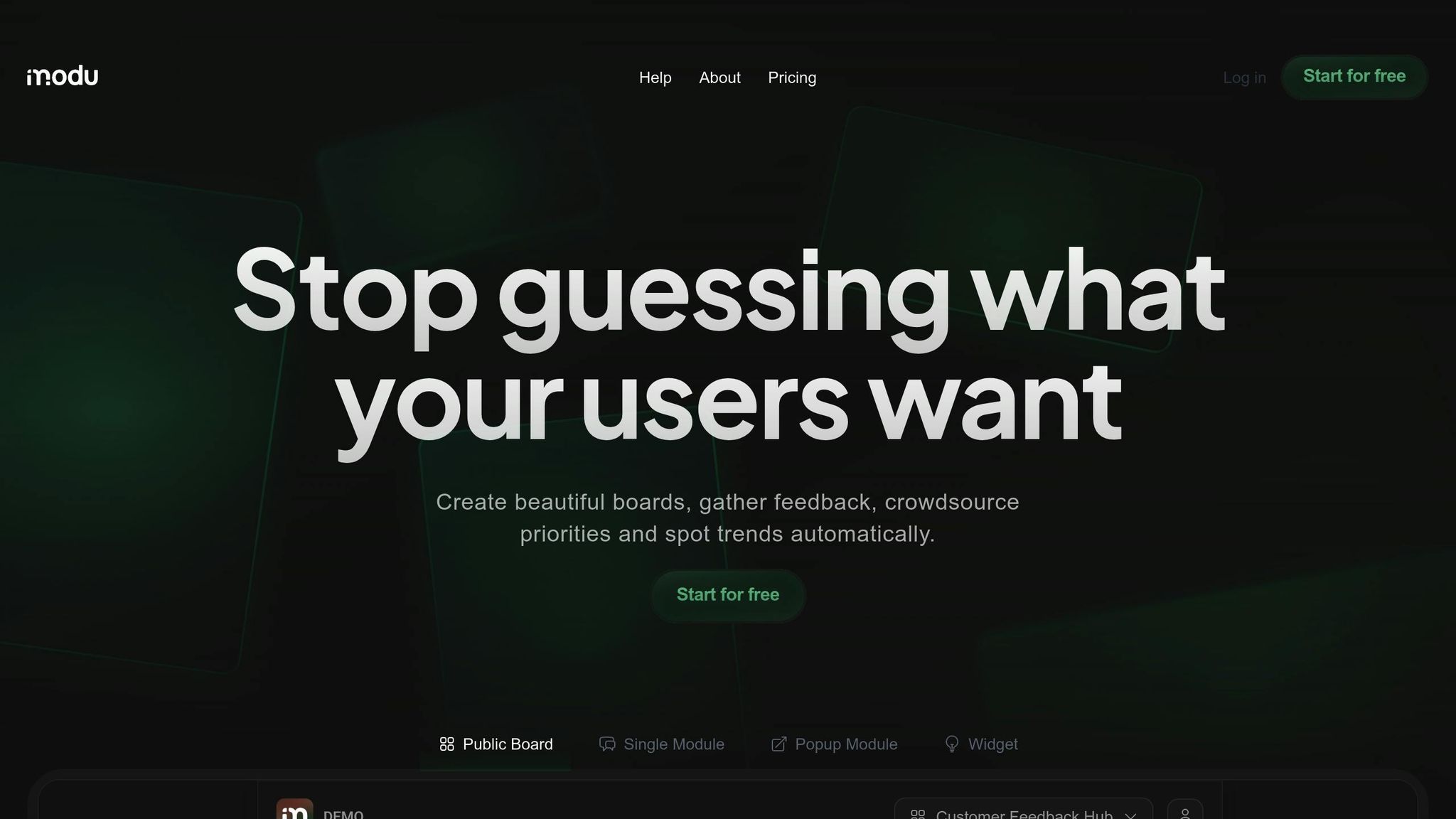
Modu tackles the challenge of fragmented feedback by consolidating user insights through its specialized modules. It offers product teams six distinct tools to collect and manage feedback effectively.
- The Suggestions module acts as a public idea board, where users can submit and vote on feature requests. This approach helps prioritize your product roadmap through crowdsourcing.
- The Text module is perfect for gathering private, open-ended responses, making it ideal for bug reports or sensitive feedback that only your team can view.
- For quick satisfaction checks, the Rating module uses a simple 1–5 scale.
- The Single and Multiple Choice modules are great for running polls or prioritization surveys.
- The Roadmap module lets you share updates on your product’s progress, categorized into Backlog, Planned, In Progress, and Shipped.
- Lastly, the Changelog module allows you to post updates, with options to include cover images or YouTube embeds for added context.
These modules can be embedded directly on your website, shared via links, or triggered as popups, making it easy to gather insights without interrupting user workflows.
Analyzing and Ranking Feedback
Once feedback starts coming in, Modu’s AI clustering groups similar suggestions, saving you from the hassle of manually sorting through them. This makes it easier to spot patterns and recurring themes.
The platform’s built-in voting system highlights which features matter most to your users. Instead of guessing what might have broader appeal, you can see exactly how many people support each idea. The analytics dashboard further enhances decision-making by tracking trends over time, showing you which themes are gaining traction and which are losing steam. This data-driven approach helps you prioritize with confidence.
Connecting Feedback to Your Development Tools
Modu integrates seamlessly with popular tools like Slack, Jira, Linear, Trello, and ClickUp, ensuring feedback flows directly into your team’s existing workflows.
"Modem connects to the places where your users already talk (Slack, Discord, GitHub, Linear, email) and uses AI to make sense of all that conversation."
- Modu Documentation [8]
With just one click, high-priority suggestions can be turned into Jira issues or Linear tickets. Slack notifications keep your team in the loop about new feedback or shifts in voting trends. Modu also simplifies the feedback loop by notifying users when their requested features are shipped and sending weekly digests to your team. This ensures feedback isn’t lost in spreadsheets but becomes an integral part of your sprint planning and development process [8].
How Feedback Tools Improve Product Outcomes
Better User Satisfaction and Retention
Features built on real user input can significantly improve retention, addressing the common issue where 64% of features see little use [5][2]. By combining user feedback with behavioral data, teams can focus on changes that genuinely enhance satisfaction. This is crucial, as 32% of customers will stop engaging with a brand after just one poor experience [3]. Feedback tools allow you to pinpoint friction points early, revealing how many users are affected and whether those users are part of your most valuable segments. With this insight, you can prioritize fixes that matter most, rather than chasing isolated complaints.
When users see their feedback turn into actual features, it builds trust. Even if certain requests can't be implemented, explaining why shows that their input is valued, fostering loyalty and turning casual users into advocates.
This user-focused approach naturally makes the development process more streamlined and effective.
More Efficient Development
Feedback tools shift teams from subjective debates to data-backed prioritization, ensuring that development efforts focus on the features that matter most.
"Prioritization without predictive grounding is just politics disguised as product management." - Figr.design [5]
AI-powered feedback tools can analyze thousands of comments in minutes, uncovering patterns that might take weeks to identify manually. Amol Jain, Head of Product Engineering at Replit, shared his experience:
"I think the aha moment was truly when I first connected all the sources to AI Feedback... That visibility was unprecedented." [1]
This capability allows teams to act quickly on emerging issues, addressing them while they're still relevant. The result is a development cycle focused on precision and speed - less time debating what to build and more time delivering features that resonate with users.
6 Ways To Collect Product Feedback
Conclusion
The development landscape is evolving rapidly, with speed and user focus now taking center stage. While coding agents can churn out features in hours, the real challenge lies in deciding what to build. Without a clear strategy, fast development risks wasting time and resources on features that fail to make an impact.
This is where feedback tools come in, replacing guesswork with actionable insights. By consolidating input from sources like support tickets, app reviews, and sales calls, these tools create a unified view of user needs. They also tie feedback to real user behavior and business metrics, helping teams prioritize features that truly matter - whether it's reducing churn, boosting customer expansion, or improving user activation. No more building based on who shouts the loudest.
Modu takes this a step further. It centralizes feedback from multiple channels, uses AI to detect patterns in record time, and ranks requests based on segment value and business impact. Beyond that, Modu can even generate PRDs and design recommendations directly from its analysis.
The result? A streamlined development process with less debate and more meaningful outcomes. By showing teams exactly which issues affect their most important customers - and why those issues matter - Modu helps create products that drive satisfaction, retention, and growth.
FAQs
How do I know which feedback to prioritize?
To prioritize feedback effectively, focus on insights that truly matter and align with what your customers need. Start by evaluating factors like how frequently a feature is requested, the seriousness of the issue, and its potential return on investment. By blending qualitative insights (the reasoning behind the requests) with quantitative data, you can make informed decisions that address genuine user needs - rather than just reacting to the loudest voices or the most urgent demands.
How can I tie feedback to revenue or retention impact?
To tie feedback directly to revenue or retention, leverage AI-driven tools to prioritize customer input based on its potential business impact. Start by evaluating the frequency of feature requests alongside their estimated ROI. This helps you zero in on improvements that matter most.
Blend qualitative insights - like understanding the "why" behind customer requests - with quantitative data, such as usage metrics. This combination allows you to pinpoint changes that not only meet customer needs but also boost retention and revenue.
Using a centralized system for tracking feedback makes it easier to connect product updates with measurable business results. This ensures that every improvement aligns with your broader business goals.
What’s the fastest way to centralize feedback from all my tools?
The fastest way to bring all your feedback together is by using a platform that automatically gathers and analyzes user input from different channels. These tools pull feedback from websites, apps, emails, and social media into one place, giving you a clear, centralized view. Automating this process saves time, cuts down on scattered data, and helps you spot important trends, making it easier to prioritize product updates effectively.